By Charles H. Thorne, MD
Board certification in plastic surgery, granted by the American Board of Plastic Surgery or an equivalent board, means a surgeon completed a plastic surgery residency, passed written and oral examinations, and maintains continuing education. In New York City, where many surgeons advertise facelift services, certification is the baseline, not the finish line. The real test is whether the surgeon performs all of the major facelift techniques and can explain why one fits your face rather than another.
I have performed every conceivable type of facelift procedure, and try to choose which technique is best for each patient. A consultation can be arranged at (212) 794-0044, 812 Park Avenue, New York, NY 10021, in person at 812 Park Avenue or by virtual consultation.
Key Takeaways
- Board certification by the American Board of Plastic Surgery, or equivalent board, confirms residency training, examinations and continuing education, but does not by itself tell you whether a surgeon performs multiple facelift techniques.
- Hospital privileges at an accredited institution mean the surgeon’s credentials and outcomes have been reviewed by peers, a layer of oversight private offices do not provide.
- Before and after photos should show a range of ages, skin types and procedures, not just one technique marketed as the best for everyone.
- An experienced facelift surgeon has many tools available and chooses the combination of techniques and procedures that best suit that patient and his or her specific facial surgery.
- One important question to ask is what facelift technique the surgeon has experience with and which technique he/she recommends for you and why.
What Does Board Certification in Plastic Surgery Mean?
The American Board of Plastic Surgery is the only board recognized by the American Board of Medical Specialties for plastic surgery certification. A surgeon certified by this board completed medical school, prerequisite residency training (general surgery or approved equivalent), and plastic surgery residency. After residency, the surgeon passed a written examination covering the full scope of plastic surgery and practiced for a period under supervision. The surgeon then passed an oral examination in which cases are presented and questioned.
This is actually even more complicated. There are good facelift surgeons who are certified by the American Board of Otolaryngology (ENT) who refer to themselves as Facial Plastic Surgeons. Their certification is considered equivalent to that of the American Board of Plastic Surgery. Otolaryngology is also one of the 24 boards under the American Board of Medical Specialties (Pediatrics, Dermatology, Internal Medicine etc.). There are other boards, however, that contain the word “Cosmetic” that are not in that category and require lesser amounts of training for certification. Buyer beware.
Certification is not permanent. The board requires continuing medical education and periodic recertification to maintain the credential. A surgeon who completed training decades ago but has not kept up with the field may no longer hold active certification.
Board certification does not tell you what the surgeon actually does in practice. A plastic surgeon may be certified and perform mostly breast or body procedures, with limited facelift experience. Certification is the starting point, not the whole answer.
Why Hospital Privileges Matter
Hospital privileges mean the surgeon has been credentialed by a hospital and is permitted to operate there. The hospital reviews the surgeon’s training, board certification, malpractice history and outcomes. Peer review committees at the hospital monitor complications and results.
A surgeon who operates only in a private office or an outpatient facility may not have undergone this level of scrutiny. The good news is that the American Board of Plastic Surgery and AAAASF, the accrediting organization for office operating rooms, do require their surgeons to have hospital privileges.
When a surgeon holds privileges at a major hospital, you know that institution has reviewed the credentials and the track record. It is not a guarantee, but it is another layer of accountability.
How to Read Before and After Photos
Before and after galleries should show a range of patients, not just one technique. Look for different ages, skin types and degrees of aging. If every photo shows the same type of face or the same operation, the surgeon may be performing only one technique.
Pay attention to the quality of the result, not just the degree of change. A natural appearance, with the face looking like itself but refreshed, is harder to achieve than a tight, pulled look. The cheeks should be completely exposed so the incisions/scars can be examined. The neck should be shown in a directly lateral position, not just a three-quarter, or oblique, view which can hide the result in the neck. Equally important but much harder to detect is the lighting; the lighting should be equivalent in the before and after photographs. Subtle changes in lighting can completely change the appearance.
Photos are selected by the surgeon. They show what the surgeon wants you to see. A consultation is where you and I discuss your specific anatomy and what is realistic for your case.
Does the Surgeon Perform All of the Major Facelift Techniques?
This is the most important question. A facelift is not one operation. There are SMAS plication techniques, SMAS flap techniques, and deep plane techniques, among others. Each addresses different anatomical problems in the cheek. The neck is separate and these terms only apply to the cheek. There are other terms that describe what a surgeon does in the neck.
For example, a deep plane facelift is entirely different from a deep neck lift.
A surgeon who only performs deep plane facelifts, or who markets one technique as superior to all others, is limited by that single tool. If you only have a hammer, the whole world looks like a nail. A surgeon with experience across multiple techniques can match the operation to your anatomy rather than applying the same approach to every case.
During the consultation, ask the surgeon to explain which techniques he or she performs, and why one might fit your anatomy better than another. If the answer is that one technique is always best, or that the surgeon does not perform the alternatives, you may not be getting the full picture. That said, the surgeon is probably more important than the technique and there are surgeons who do the same procedure on all patients and show excellent results.
What Questions Should I Ask During the Consultation?
Ask how often the surgeon performs the specific procedure you are considering. A surgeon who does occasional facelifts among a high volume of other procedures may not have the same depth of experience as one who focuses on the face.
Ask which facelift techniques the surgeon performs. If the answer is only one, ask why the others are not offered. Ask to see before and after photos of patients with anatomy similar to yours.
Ask where the surgery will be performed, and whether the facility is accredited. Ask who will administer anesthesia, and what the plan is for the first night after surgery. Many surgeons, including me, have patients spend the first night after a facelift under the care of a registered nurse. In our practice we use a hotel. Other practices may have other recovery locations.
Ask about risks and complications, and how often the surgeon sees them. In my experience, facelift surgery is very safe when performed by an experienced, board certified plastic surgeon. Obviously no operation is entirely without risk.
How Do I Know If the Surgeon Is Experienced Specifically with Facelifts?
Board certification covers the full scope of plastic surgery, from trauma reconstruction to cosmetic procedures. It does not tell you where the surgeon spends most of their time.
Ask directly how many facelifts the surgeon has performed, and how many they do each year. Ask whether facial rejuvenation is a focus of the practice, or one service among many. A surgeon who performs a few facelifts a year is not the same as one who performs them regularly. You probably wouldn’t want to come to me for breast plastic surgery because in recent years my practice has been focused on the face.
Look at the surgeon’s publications, teaching roles and professional society involvement. A surgeon who has written original articles or book chapters on facelift surgery, or who teaches the procedure to residents, is demonstrating a depth of knowledge beyond the baseline.
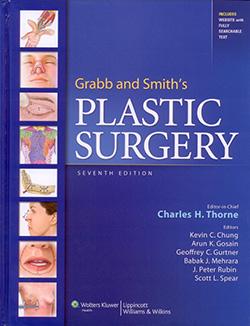
I am the Editor-in-Chief of Grabb and Smith’s Plastic Surgery, the most important single-volume textbook in all of plastic surgery, and have published 50 articles and 23 book chapters. If I have a specialty, it is the facelift. That level of involvement in the field is one marker of experience.
What Role Does the Facility Play in Safety?
The operating room should be accredited by a recognized body such as the American Association for Accreditation of Ambulatory Surgery Facilities or the Joint Commission. Accreditation means the facility meets standards for equipment, staffing, emergency protocols and infection control.
Ask who will administer anesthesia. It should be a board certified anesthesiologist or a certified registered nurse anesthetist, not the surgeon. Monitoring during surgery should include continuous assessment of heart rate, blood pressure, oxygen saturation and other vital signs.
The facility should have emergency equipment and protocols in place, and a plan for transfer to a hospital if needed.
How Do I Evaluate the Surgeon’s Approach to My Specific Case?
The consultation is where you and I decide whether surgery is appropriate, and if so, which approach fits your anatomy. A surgeon should examine your face, discuss what you want to change, and explain what can and cannot be achieved.
A good consultation includes a discussion of alternatives. If you are asking about a facelift, the surgeon should explain whether a neck lift alone, or a less extensive procedure, might address your concerns. If you are asking about a deep plane facelift, the surgeon should explain whether your anatomy is better suited to that technique or to a SMAS flap or plication.
The surgeon should also discuss what to expect after surgery. The goal when performing a facelift, or any type of facial surgery, is to make the patient look like herself or himself, just a crisper version. A surgeon who promises a dramatic transformation, or who shows you photos of results that look nothing like you, is setting unrealistic expectations.
What About Cost?
Cost varies widely in New York City and depends on the surgeon’s experience, the facility, the anesthesia and the extent of the procedure. Board certification and hospital privileges do not determine the fee, but they do reflect the surgeon’s training and accountability.
Price is not a reliable indicator of surgeon quality or safety; verify board certification and facility accreditation instead. A higher fee does not guarantee a better outcome. It often reflects the time the surgeon spends in the operating room, the quality of the facility, and the level of postoperative care.
Ask what the fee includes. Some surgeons quote a surgical fee only, with separate charges for anesthesia, the facility and postoperative visits. Others quote an all-inclusive price. Make sure you understand what you are paying for.
When to Call
After facelift surgery, call the office if you notice swelling that is much greater on one side than the other, or swelling that is increasing rapidly rather than settling. Call if you have severe pain on one side that is not controlled by the prescribed medication. Call if you see bleeding through the dressing, or if the dressing becomes soaked. Call if you develop a fever. Call if the wound edges change in appearance, becoming more red, warm or separated.
These are signs that require prompt evaluation. Most are rare, but recognizing them early makes a difference.
Risks and Complications
Every surgical procedure carries risks, and facelift surgery is no exception. The specific risks and complications you face depend on your health, your anatomy, the technique used, and the extent of the procedure. These are discussed in detail during the consultation, where I review your medical history and your individual risk factors.
Results vary from patient to patient. What is achievable in one case may not be achievable in another, and the recovery experience differs as well.
Frequently Asked Questions
What is the difference between board certified and board eligible?
Board certified means the surgeon has completed training and passed the examinations required by the American Board of Plastic Surgery or an equivalent board. Board eligible means the surgeon has completed training but has not yet passed the exams, or has not maintained certification. Only board certified surgeons have met the full standard.
Can a surgeon who is not board certified in plastic surgery perform facelifts?
Yes. It is important to verify certification specifically in plastic surgery by the American Board of Plastic Surgery or an equivalent board.
How do I verify a surgeon’s board certification?
The American Board of Plastic Surgery maintains a public database on its website where you can search by surgeon name and verify certification status. The American Society of Plastic Surgeons also lists its members, all of whom are board certified, on its website.
Does board certification guarantee a good result?
No. Board certification confirms training and knowledge, but it does not measure skill, judgment or experience with a specific procedure. A surgeon may be board certified and still have limited facelift experience, or may perform only one technique. Certification is necessary, but it is not sufficient.
Should I choose a surgeon who only does deep plane facelifts?
No. A surgeon who performs only one technique is limited by that tool. Patients were categorized into 5 groups based on facial aging patterns and anatomical needs, including brow lift, midface lift, lower facelift, and neck correction, in a published classified approach to the endoscopic deep plane facelift. The right technique depends on your anatomy, and a surgeon who can perform all of the major approaches can match the operation to your face.
What should I do if I am not sure after the first consultation?
Seek a second opinion. A consultation is an opportunity to ask questions and understand your options. If you are not confident in the surgeon’s answers, or if the approach does not feel right, consult another surgeon. You should feel that the surgeon understands your goals and has the experience to achieve them.
Schedule a Consultation
Choosing a surgeon is a decision that depends on training, experience, and the ability to match the operation to your anatomy. Over more than thirty years in practice, I have worked with the full range of facelift techniques and match the approach to the individual anatomy in front of me. My philosophy of facelifting, like my philosophy on all cosmetic procedures, is to do as little as possible to give the facelift patient the result he or she seeks.
A consultation can be arranged at (212) 794-0044, 812 Park Avenue, New York, NY 10021, Monday to Friday, 9 AM to 5 PM. Consultations are available in person at 812 Park Avenue or by virtual consultation. Our staff will respond within 24 hours during normal business days.